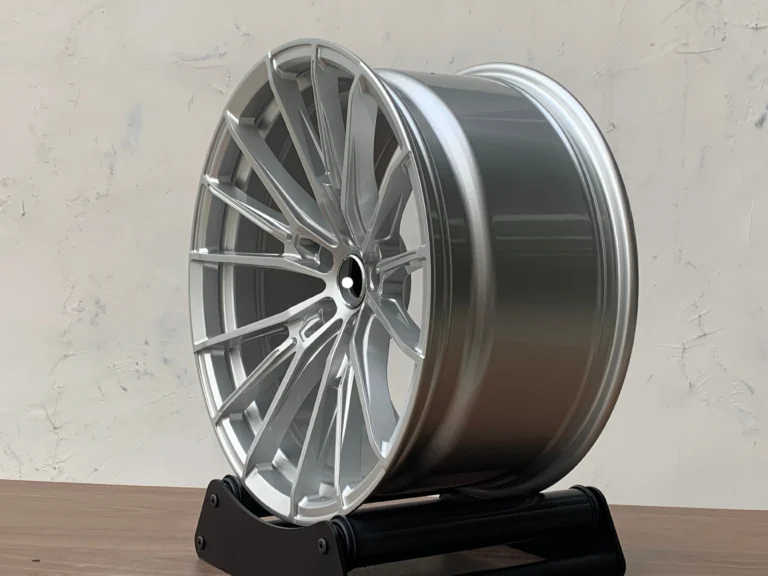

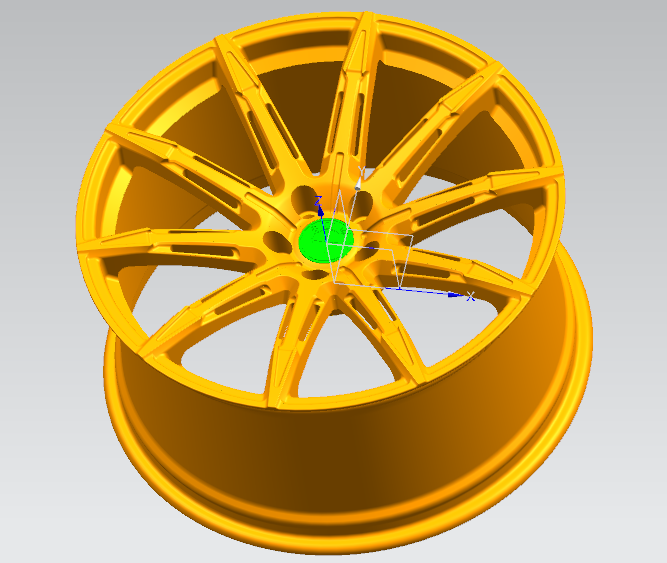
The weight of ultra-lightweight wheels depends on several factors:
① Vehicle Type: High-horsepower or heavy vehicles are unsuitable for lightweight wheels, as these wheels are prone to deformation or cracking under such loads; lightweight wheels are generally not recommended in these cases, where load ratings exceeding 850kg are typically required. Conversely, for lighter, lower-horsepower vehicles—such as sedans with 2.0T engines weighing 1.6 tons or less—lightweight wheels with load ratings of 690–750kg are appropriate.
② Wheel Design: Designs requiring more material—such as wide-spoke configurations or those with six or more spokes (e.g., Mercedes-Benz “monoblock” styles or wheels from the US brand Rotiform)—will naturally be heavier.
③ Lightweight Design Techniques: These include reinforcing the structural mechanics of the spokes, using narrow yet thick spoke patterns, employing intricate mesh or cut-out designs to remove excess material, and thinning the rim flange to facilitate force dissipation. Regarding the thinning of the rim flange: why do designers favor this method? During actual driving, when a car hits a pothole at speed, the impact force is transmitted from the tire to the wheel. The rim flange (the outer edge) is the first point of contact. A thinner flange is designed to deform upon impact, dissipating the force to protect the wheel from fracturing and maintaining the wheel’s structural integrity, thereby preventing more severe damage to the vehicle. Since the wheel deforms without cracking—and such deformation is typically not covered under warranty—owners usually attribute the issue to their own driving rather than seeking a claim from the manufacturer or brand.
Ultimately, the choice of wheel depends on the specific vehicle and how it is used. One should not blindly pursue weight reduction at the expense of safety. May everyone find a forged wheel that is suitable, aesthetically pleasing, and safe.